Gli Etruschi e l'Olanda
At the Fondazione Luigi Rovati Foundation, an exhibition organized in collaboration with the Rijksmuseum van Oudheden in Leiden, the MAEC – Museum of the Etruscan Academy and the City of Cortona, and the Municipality of Cortona exceptionally brings back to Italy the remarkable collection of Etruscan bronzes assembled by the Cortona-born Corazzi family and now housed in the Dutch museum.
Alongside the bronzes, a selection of volumes retraces their critical reception, highlighting both the value of bibliographic sources as essential tools for understanding the history of the works and their collecting, and their role in the transmission of iconographic models and visual memory.
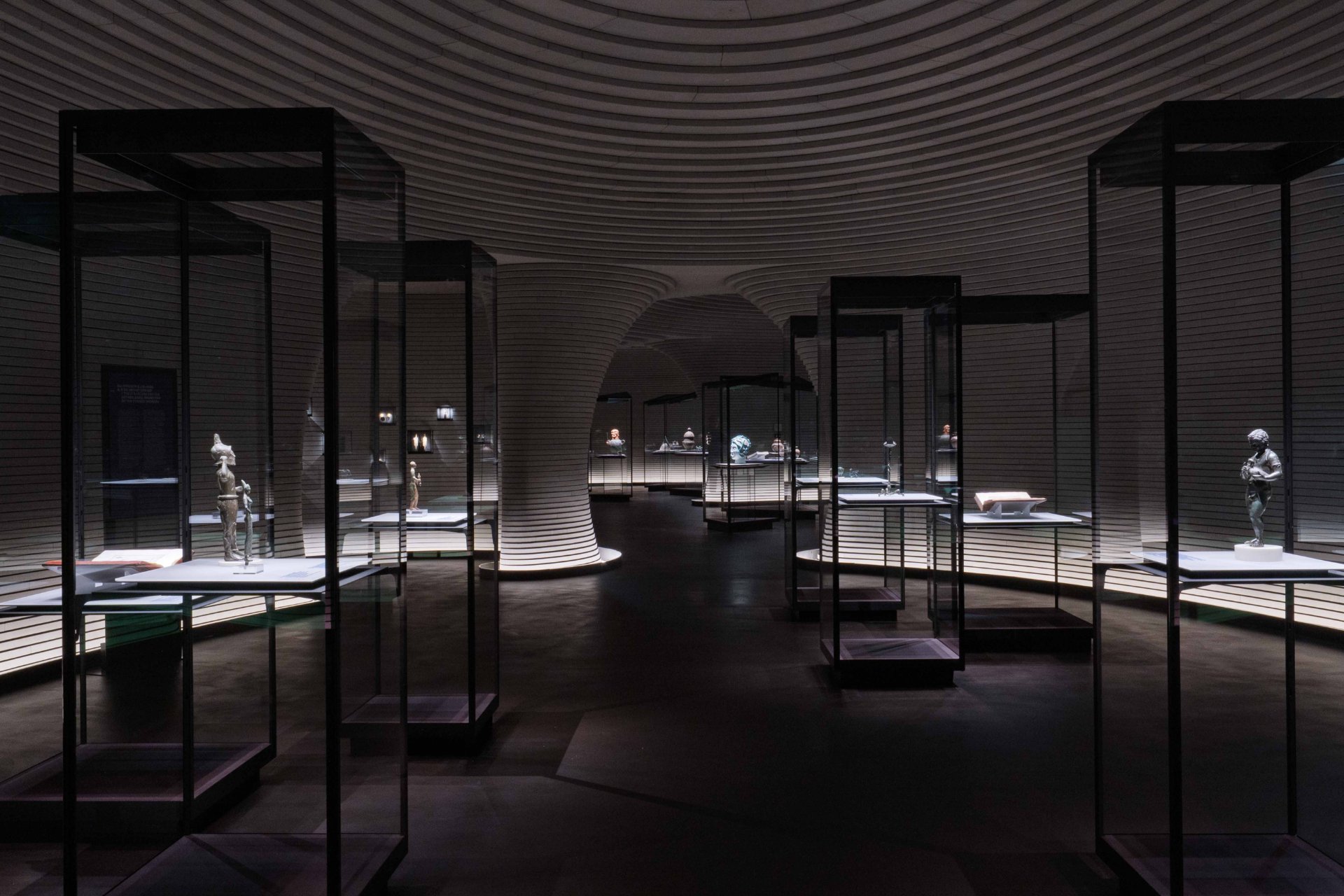
The exhibition project, hosted in the Hypogeal Floor of the Art Museum of Fondazione Luigi Rovati, resumes and develops the path initiated at the MAEC in Cortona, focusing on the Etruscan artefacts of the Corazzi collection and exploring the role of private collecting in the construction of cultural heritage, between local and European dimensions. The relationship between the Corazzi collection and the Foundation’s permanent display shows how private collections can become instruments of shared knowledge, from the nuclei of the earliest public museums to current forms of integration between public and private institutions.
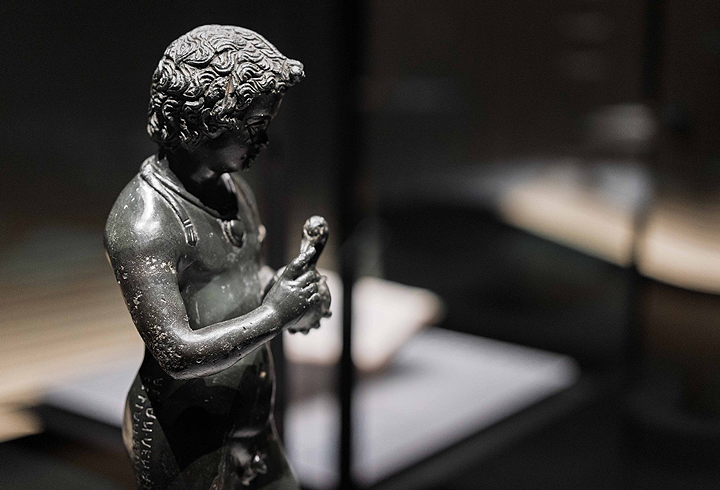
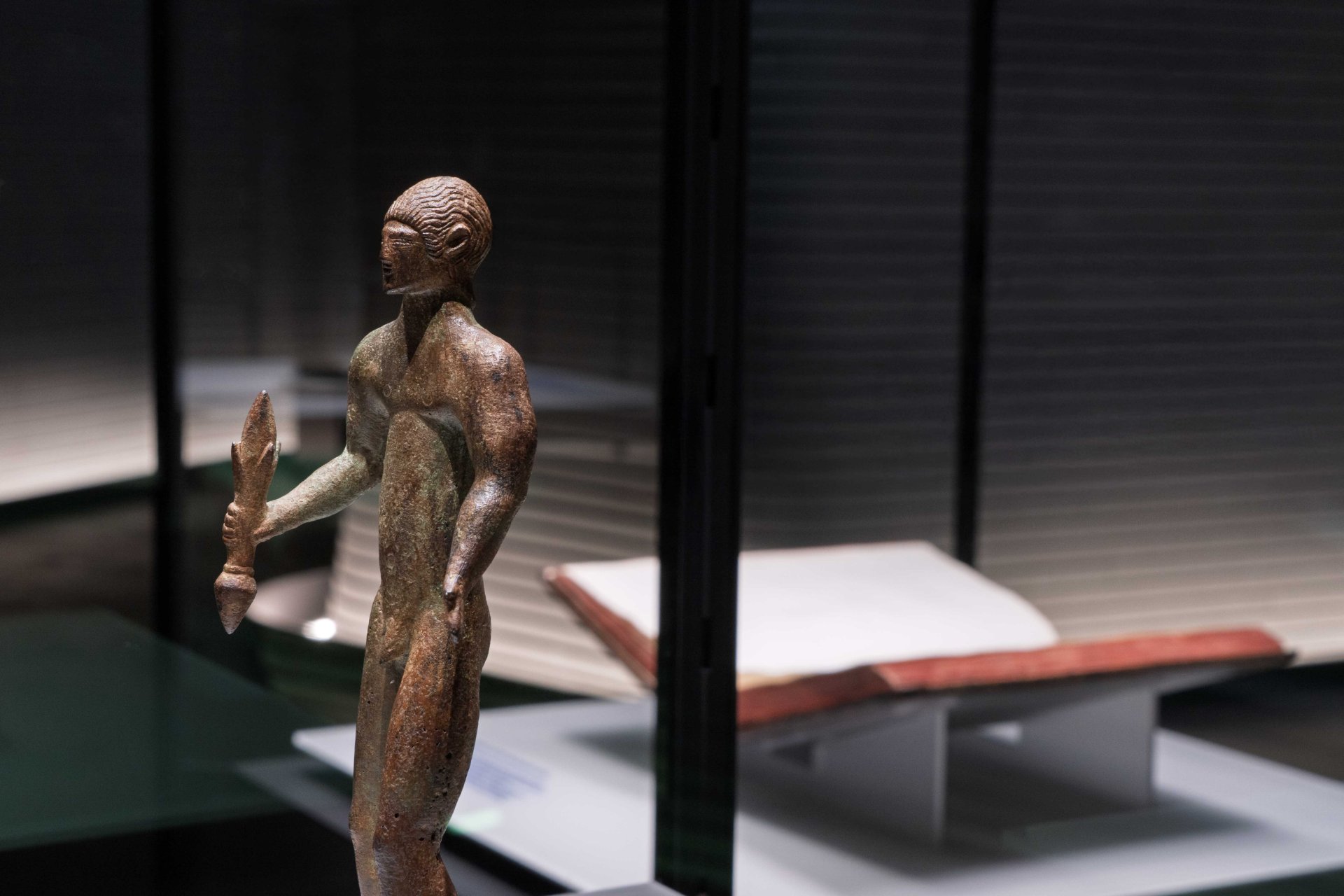
The collection of Galeotto Ridolfini Corazzi originated in the 18th century, when the spread of intellectual freedoms encouraged the emergence of an international elite interested in archaeology and ancient civilisations, contributing to the circulation of artefacts and works of art. Among the bronzes on display, some statuettes and objects have a votive and cultural function, such as the Boy with Goose, depicting a nude child holding a goose, wearing a bulla around his neck, whose inscription on the right leg attests its votive purpose; a similar function is confirmed by the dedicatory inscription of the bronze statuette of Laran, the god of war represented with cuirass and helmet, datable between 540 and 520 BC; dating instead to the mid-4th century BC is the small bronze figure of a Griffin, a mythical creature combining the lion, king of the earth, and the eagle, queen of the sky, bearing on the right side of its body a dedicatory inscription to Tinia, the god of thunderbolts.
Alongside the Corazzi bronzes, a selection of volumes is displayed, underscoring the documentary value of early publications for the study of the history of works of art and the history of taste. Among them are a copy of Ad monumenta Etrusca operi Dempsteriano additae explanationes et conjecturae by Filippo Buonarroti (1723–1724), Due ragionamenti del dottore Lodovico Coltellini agli Accademici Etruschi di Cortona sopra quattro superbi bronzi antichi […] by Lodovico Coltellini (1750), and Museum Cortonense by Francesco Valesio, Antonio Francesco Gori, and Ridolfino Venuti (1750).
In this context, the book emerges as a curatorial device capable of keeping the life of the object active even in its physical absence—when dispersed, inaccessible, or distant—making its enjoyment and study possible and ensuring its transmission over time. Bibliographic reflection thus introduces a relationship between two distinct communicative worlds, the work and the book about the work, understood as a space of mediation and interpretation for the preservation and reactivation of material memory.
With the contribution of